Published 2026-10-05 · Ashtanga Yoga
Where are our intentions when practicing Yogasanas?
When we step onto the mat to practice Yoga, we rarely stop to ask ourselves: where, in fact, is our intention? What moves us at that moment?
The many intentions of practice
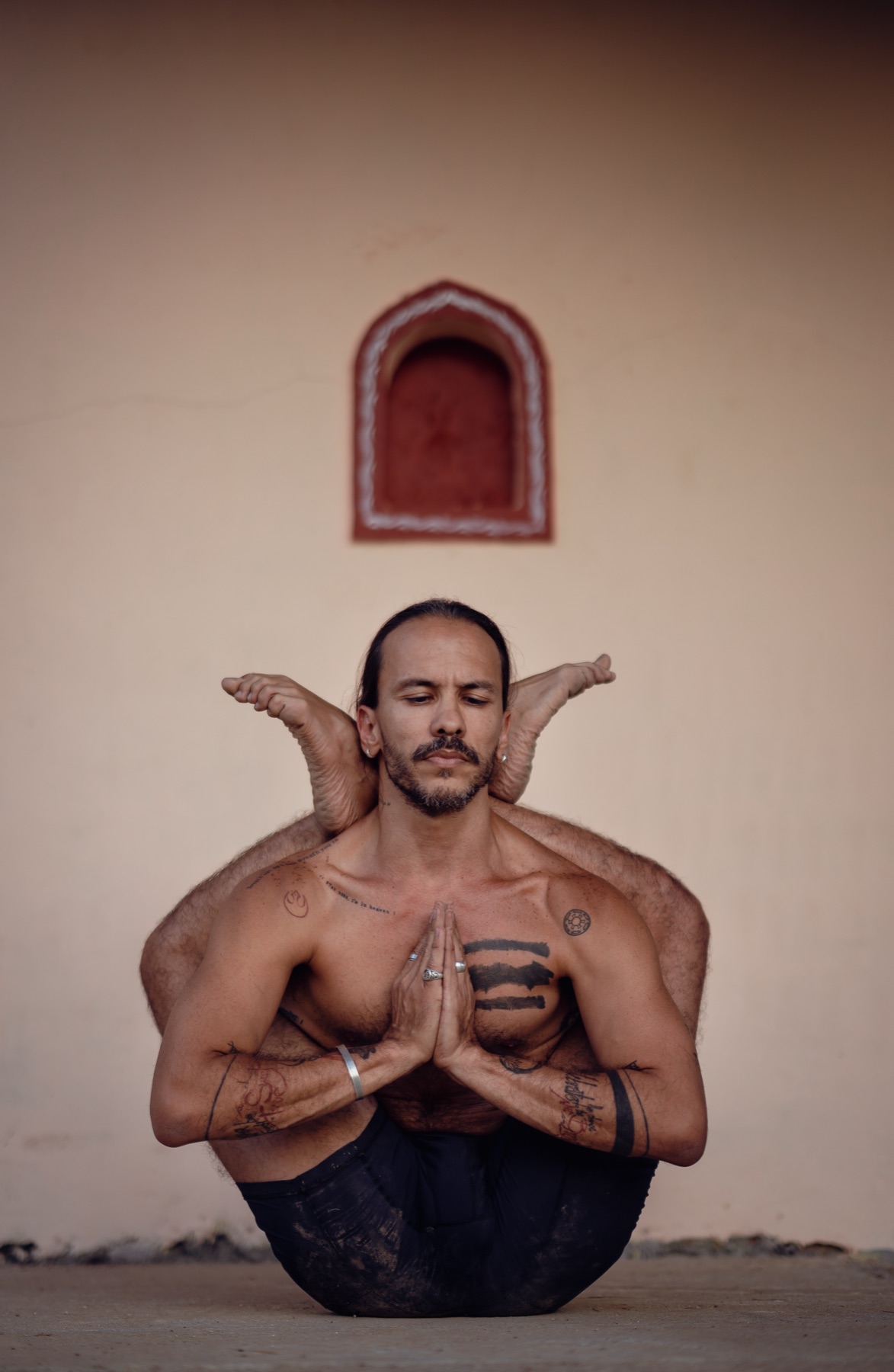
For many, practice begins with aesthetics. The search for a "beautiful," aligned posture, worthy of admiration. There's no problem with that. At other times, the motivation might be performance: overcoming physical limits, gaining strength, endurance, flexibility. That too is legitimate.
There are also those who practice with the desire to conquer new postures, advance in the series, develop more complex bodily skills. Or those who find in Yoga a path to breathe better, expand lung capacity, and cultivate more conscious breathing. Not to mention the intention to take care of the body, making it healthier, stronger, and more balanced.
All of this is valid. All of this is part of the path.
But it cannot be its end.
Beyond the mat
Limiting the practice of Yoga to what happens on the mat (to physical movement, to the execution of postures) is to reduce its transformative potential. The āsanas are, indeed, a powerful tool, but they are only a gateway. Yoga's true invitation is to carry this experience into life.
It's in the way we breathe outside of practice. In the way we react to difficulties and also in the quality of our presence in daily life.
During practice, one of the most direct paths to access this state is the return to the present moment. And how do we do that? Through simple, yet profound elements: conscious breathing, the gaze (drishti), and the activation of the bandhas.
When we connect to these points, we significantly increase the chances of truly being in the here and now.
And it is in this state of presence that something changes.
From form to experience
We realize that āsanas are not just external forms, but internal experiences. Each posture begins to reveal aspects of our body, our mind, and our patterns. Difficulties cease to be obstacles and become teachings. What comes easily ceases to be an achievement and becomes an observation.
Practice becomes psychophysical.
And, if we allow ourselves to go beyond the surface, the process can be deeply transformative.
Not necessarily easy. Often uncomfortable. Capable of questioning old beliefs, exposing automatic patterns, and confronting internal limitations. Still, it is in this space that growth resides.
An āsana practice conducted with discernment, honesty, and presence, even if it is only a part of Yoga as a whole, can reconnect us with something essential: our true Self.
At this point, the āsana ceases to be merely a way of being.
And becomes a way of being.
Allow yourself to practice and feel.
Allow yourself to experience the sensitivity that Yoga can awaken.
By Lucas Carvalho